Armagideon Time

1983 was the year of the Great Videogame Crash, when the flood of overproduced and undercooked product forced a severe market correction that effectively killed the home console market until the NES started gaining traction a couple of years later. The savvier developers shifted their focus to home computers, which offered more functionality and perceived value than dedicated game hardware. Most either went belly up or divested themselves from the industry, dumping their remaindered overstock at fire sale prices.

Being a hungry-eyed eleven year old, I knew next to nothing about the mechanics of this economic implosion. I was too busy marveling at the sudden affordability and availability of 2600 cartridges which had previously been restricted to the narrow window of birthday or Christmas presents. Five bucks was the new normal. Between my allowance and what I could cajole from my indulgent maternal grandparents, that meant enough to buy a new game every weekend and still have enough left over to pick up a GI Joe or Star Wars action figure.

Over the course of 1983, my Atari 2600 game library went from a half-dozen titles to upwards of forty, conveniently stored in partitioned cardboard boxes for stereo components that my mom brought home from the factory and were perfect suited for their new role. Most of the games were utter crap, but that was mitigated by the low price and the fact that there’d be a new game to play the following weekend.

(A more detailed discussion of the subject can be found in the Growing Up 2600 feature I did a few years ago.)

The 2600 was undeniably the centerpiece of my gaming experiences in 1983, but it was still only one facet of the nigh ubiquitous popcult phenomenon gaming had become. The industry may have been on the verge of economic freefall, but the cultural footprint of the videogame fad was at its peak. There were stickers, novelty songs, t-shirts, toys, cartoons, and game shows. Gaming references popped up amidst the canned laughter of middle-of-the-road sitcoms, and ads for gaming paraphenalia were all over comics books and other youth-centric publications.

It was the only reason I begged my parents keep up my subscription to Boys Life, even though I’d soured on the whole scouting experience by then.

It got me chewed out during “lab class,” in which the “most promising” elementary school students in Woburn were brought together once a week. There we would listen to the wingnut teacher’s weirdly racist tirades before spending the rest of the day acting out Scholastic Magazine‘s abridged scripts of current movies. I was so enraptured by an ad for Choplifter that I lost my place and forgot I was supposed to be reading Donald Sutherland’s part in Max Dugan Returns.

As you grow older, you realize that your teachers were just human beings doing a job, and thus prone to human failings. Sometimes a nutjob manages to make it through the vetting process. Sometimes circumstances tip a previously balanced soul into the realm of teeth-gnashing eccentricity.

I know this now. I did not know this then, when the lab class instructor fell on me with a rage I hadn’t seen outside of my father’s worst drunken benders. All for flubbing a line because I was daydreaming over the ad copy of a helicopter themed shoot ’em up. To this day, I can’t boot up the Master System version of the game without experiencing a fleeting pang of unease.

Beyond the childhood traumas and Pac-Man bubblegum stickers and Zaxxon boardgames on Caldor’s clearance aisle, there were other avenues besides home consoles for getting one’s game on in 1983. Handheld and tabletop LED games were the rage, an endless supply of licensed and unlicensed ports of popular offerings. We played them with gusto, until the initial set of batteries died and our parents wouldn’t spring for more.

My maternal grandfather, an odd duck of an radar engineer who gave Lil Bro and me our 2600, used to spend his downtime chasing high scores on a Tomy Pac-Man handheld while cursing the Democrats and chainsmoking cigarillos. His preferred gaming spot was the far end chair of my grandma’s kitchen table. It was where he had the stroke that — following four years in a semi-vegetative state — would eventually kill him. He was a couple weeks from retirement when it happened, abnormally chatty about all the things he was going to accomplish with all that free time.

I wasn’t what you’d call a self-starter before my grandpa had his stroke, but seeing what happened to him made me extra-determined not to defer life’s pleasures for the sake of a job.

At the top of the 1983 gaming hierarchy were the gloriously loud and lurid arcade cabinets. Their allure was heightened among my circle because of their limited accessibility. Woburn didn’t have an arcade, and my friends and I wouldn’t discover one in biking distance (Trains & Games in neighboring Wilmington) until the spring of 1984.

The local Boys’ Club had Pac-Man and Donkey Kong Jr cabinets, but was also populated by semi-feral pre-teens who combined Lief Garrett’s wardrobe with Caligula’s sense of human empathy. The public service spots made the place seem like a confidence-building utopia rather than the Lord of the Latchkey Flies scenario it actually was. Opportunities to blow through your lunch money in fifteen minutes trying to learn the basics of the games had to be weighed against discovering new and painful ways your arm could be twisted backwards until you confessed to being a “total gaylord spaz.”

The multiplex and the Bowladrome both hosted a small number of frequently rotated machines, but neither place was open territory for unaccompanied kids uninterested in the central attractions. Gaming in those places was more of an incidental added value to playing a few frames or catching a movie. The multiplex was the first and only time I’d ever see a Looping cabinet in the wild. I couldn’t not get the hang of the flight-stick styles controls with the single quarter and five minutes of experience I had with the game, but I was mesmerized the minimalist, kinetic sculpture aesthetic shown during its attract mode. Looping would be the first arcade game I sought out via emulation, by which point my hazy childhood nostalgia had utterly outstripped the pretty lackluster reality, as these things tend to do.

There were other, more transient places for a North Woburn kid to experience cabinets. Class trips to Canobie Lake Park in Salem, NH invariably involved sneaking off to one of the park’s two arcades, if only to gawp at some older kid work his way through Dragon’s Lair while we tried to figure out how the game actually worked. The carnival held every spring on the Northeast Trade Center grounds (now a huge commercial-retail complex) brought with it an old military tent full of battered pinball tables and videogame cabinets. Stern’s Berzerk was the big draw there, as I dug the run ‘n’ gun simplicity, even if the machine’s voice module had long since shit the bed.

Any other arcade gaming I did in that year came from short sessions during family trips, as every service area or tourist trap typically sported at least one game machine.

As a result of this limited access, I never managed to get particularly good at any of these old arcade games. I enjoy playing them and they hold a historic and nostalgic allure, but I’m lucky if I can clear the first wave of Space Invaders or get past the third board in Pac-Man. The only exceptions to this are Mr. Do and Dig Dug, as I apparently have an innate mastery of the “garden-themed maze-digging mascot” microgenre.

So if if the fate of the world should ever require dropping a heavy object of a cute cartoon character, you know where to find me.

I didn’t set foot into a proper movie theater until I was eight years old, when my aunt took my brother and I to see The Black Stallion at the multiplex across the highway from the North Woburn shopping plaza.

Up until (and even for a few years after) then, the entirety of my big screen viewing experiences took place in the back of my parents’ gas-guzzling domestic dinosaurs at the Billerica drive-in. That’s where I saw Star Wars, Superman, and the cinematic release of the Battlestar Galactica pliot. It was also the first place I ever saw a real live videogame machine (a battered Night Driver cabinet in the snackbar lobby) and heard my first Blondie song (“Heart of Glass,” pumped through a tinny drive-in speaker).

It’s not difficult to figure out why my dad preferred the drive-in to the multiplex. It offered a degree of privacy, which made it easier to cuff the ear of his unruly children and allowed him to knock back a few cold ones from a strategically placed Styrofoam cooler.

1983 would mark the end of my drive-in years, but not before I got a chance to see damaged and poorly spliced prints of D.C. Cab and Rocky III on a double bill branded “T’n’T.” I pity the fool who brainstormed that one, but also admire his trend-chasing gusto.

Gotta gather those gold chains while ye may, sucker. And that’s no jibber-jabber.

(This was the likely genesis of the Mr. T psuedo-fandom — as in “friends and classmates assumed I was a huge fan and give me Mr. T ephemera out of the blue” — that would hang over me until high school, and I would end up leaning into at the dawn of the eBay era.)

Falling between the local cineplex the drive-in on the distribution hierarchy, the Redstone off of Route 28 in neighboring Stoneham was the other main movie venue during my formative years. A model of sleek Space Age opulence when it originally opened, it had gone budget-conscious seamy by the time the early 1980s rolled around. The cheapness made it my mom’s venue of choice when my dad was doing his National Guard thing and she wanted to get my brother and I out of the house.

It was where I saw Clash of the Titans in 1981 and Megaforce in 1982 — both of which my mom mocked relentlessly — and where I dragged to see Superman III the year after that.

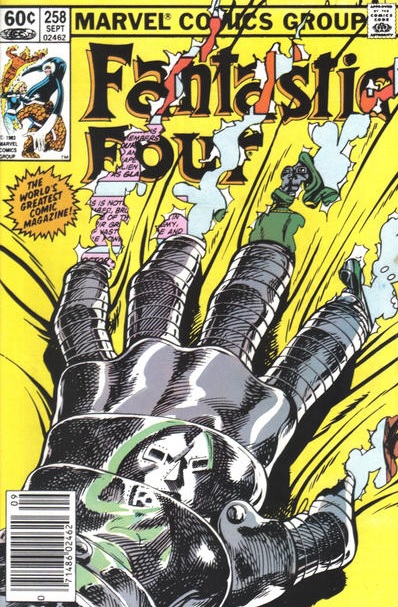
I’d already hit that stage in my fandom where my childhood adoration of Superman had started losing ground to the bad-ass broodiness of Wolverine and the adolescent melodrama of the New Mutants, but I hadn’t quite written the character off…until I spent two hours fidgeting through a cinematic misfire so blatant that even a crap-devouring eleven year old geek couldn’t justify the trainwreck unfolding onscreen. It was a “be sure to drink your Ovaltine” moment, and brunt of my disappointment (unfairly) fell on poor Kal-El’s broad shoulders.

1983 was also a watershed in my cinematic experiences because it was the year that my friends and I were first granted the privilege of attending movies without adult supervision. We celebrated this newly won freedom by diving headfirst into the cinematic drek that trailed in the wake of the era’s brief 3-D revival.

Oh, Metalstorm: The Destruction of Jared-Syn…

You’ve heard the jokes, made the references, perhaps even caught the actual project on basic cable some afternoon.

I saw it on the big screen. In 3-D. With my pal Scotty and a couple of the neighborhood girls.

For a kid who hadn’t yet seen The Road Warrior and whose quality parameters for action sequences were still calibrated to a Glen Larson made-for-TV baseline, Metalstorm…was still pretty shitty. I was much more interested in the “free” pair of polarized glasses and joining in when the girls made fun of Scotty for dramatically ducking during the pretty lackluster 3-D effects.

I went to see Amityville 3-D with my best pal Artie and a kid named Jason. Jason only lived in the neighborhood for a short time. The area’s abundance of vacant “mother-in-law” apartments and cheap rooms to rent made it a stopover point for recently divorced women and their kids. They’d stick around long enough to finalize the legal business, then take off for a fresh start in Florida or California. Jason wasn’t the first of these transient faces to drift in and out of our circle, nor would he be the last.

The original Amityville Horror flick (caught on HBO during the month my family had cable) was a traumatic milestone in my love of spooky stuff. It gave me nightmares, which my dad would exploit for laughs, which gave me even nastier nightmares. The original “true story” novel was probably the first (and most certainly the thickest) grown-up book I read from cover to cover.

That blind terror mellowed in the three years leading up to the release of Amityville 3-D, but there were still bits residual dread as we walked to the theater. This would be the first “real” (if PG-rated) horror film I’d see on a big screen. Could I take it? Would I panic? Would the other guys call me a wuss?

I needn’t have worried. Some grody FX aside, it could’ve been run as a Dan Curtis direct-to-TV production. I felt pretty good about being able to ride out the flick’s mild horrors, enough to take a perverse glee in later using my aunt’s Ouija board to freak the shit of out of the actually-spooked-by-the-film Artie.

The apple doesn’t fall far from the tree, I guess.

Strange Brew, the cinematic spinoff of Rick Moranis and Dave Thomas’s “McKenzie Brothers” SCTV bits, was the third and final of 1983’s “kids only” outings to the multiplex.

It was the funniest movie I had ever seen, though a lot of that had to do with being an eleven year old boy watching it with three other eleven year old boys in the front row of an otherwise empty theater.

It was also responsible for my pals calling each other “hoser” and ending every single one of their sentences with “eh?” for at least a month.

Finally, no discussion of an early adolescent geek’s 1983 in movies would be complete without a few words about Return of the Jedi.

I saw it a few weeks after it premiered. My mom took my brother and I to see it while my dad was doing his “two weeks a year” for the Guard. We caught a weekday evening screening at the multiplex, not the Redstone. I wasn’t expecting it at all, and was as touched by my mom’s generosity as I was excited to finally see the conclusion of something that had been a part of my life since kindergarten.

When I was in the theater, in the moment, caught up in the spectacle, I enjoyed every second of it. When I stepped out the theater into the parking lot afterward, though, I just felt a bit empty.

In truth, the movie itself was an anticlimactic afterthought to the avalanche of comics, photo-mags, toys, and other merchandise which was the real engine powering the franchise by that stage. Every “OH WOW” moment on screen was mentally followed with a “I hope they make a action figure/vehicle/playset of it” and even that toyetic allure was offset by the fact that the increasingly sophisticated and articulated G.I. Joe line had usurped the King of the Toybox crown.

Within a few months, every Star Wars figure my brother and I had would be demoted to extras in our fantasy play pageants, their trusty rides remanded to Cobra or some Real American Heroes.
Even the biggest fans in our circle began talking of the franchise in the past tense as they moved on to other more novel distractions. By the time the following summer rolled around, it was all but forgotten.

Nostalgia is all about counting the hits while ignoring the misses. This is especially true with childhood nostalgia, where youthful affections gain intensity over the temporal distance and blot out less pleasant memories.

The gap between “what was” and “what we choose to remember” has been a recurring theme over AT’s decade of posts. My relationship with the subject has been complicated and sometimes contradictory, with historical curiosity and nostalgic wistfulness existing in a self-perpetuating feedback loop. Come for the old videogame ads, stay to piece together a case study in the dysfunctions of consumer capitalism.

In spotlighting a year as significant as 1983 was for me, there’s a real risk of falling into the nostalgia trap, of letting selective memories of material culture paint a skewed image devoid of the host of horrors that accompanied those flashes of joy — and there were horrors, a’plenty.

For starters, I was eleven years old. When adults celebrate youthful freedom from responsibility, they tend to ignore the agonies of limited agency that are the flip-side of that “blessed” state. I’m talking about the tyrannies — however mild or benevolent — imposed by school, adult authority figures, and other socio-economic factors absolutely beyond a child’s control.

That’s just a universal baseline. The specifics of each individual childhood can be, and too often are, far more harrowing.

In 1983, I lived in a two room apartment with my parents, my little brother, my disabled paternal grandmother, and my teenage aunt. The inherent stresses in such a dynamic were further amplified by economic concerns, with my mother having to take a full-time job after my dad was laid off for a good stretch of time.

The situation also escalated my parents’ ongoing mental health issues, leading to strange and terrifying outbursts which fell on my head with greater frequency — my mom’s weird tendency to violently lash out in response to some random trigger (such as a kid asking for a glass of milk or making irritating noises with his mouth) or my dad’s alcoholic rampages of mental cruelty. Avoiding them in such cramped quarters was nigh impossible.

This was my 1983, as was the mad afterschool rush past the intersection of School and Merrimac Streets, the point at which my elementary school tormentors would give up the chase. Most of the time.

Geekdom’s heroic journey narrative is fond of spinning these horrors into a persecution based on tastes. “The jocks” mocking “the nerd” for liking Star Wars or Spider-Man. These (suspiciously similiar) experiences are in turn used to justify gatekeeping and exclusionary hierarchies of fandom, where the bullied become the bullies.

None of that jibes with my experiences. I was never picked on or called “fag” or physically attacked because I liked comicbooks or videogames. I was picked on because kids can be cruel and spiteful and will instinctively seek out a perceived “weak pigeon” to stand that the bottom of the pecking order.

Maybe it was because of my clothes or my ineptness at kickball or awkward socialization skills. It doesn’t matter, because it was going to be something. if the mark didn’t fall on me, it would’ve fallen on someone..and I’d probably would’ve joined in while thanking the Baby Jesus it wasn’t me.

1983 was when I had the pre-adolescent realization that my childhood friends were on separate life trajectories. Bonds formed through geographic proximity were giving away to ones formed out of shared interests. I was the meek A+ student in a crowd of proto-heshers shifting from childhood hi-jinx to adult criminal behaviors. There was no S.E. Hinton-esque painful moral stands to be made, just an agonizing struggle between the fear of getting dragged along or the fear of being left behind.

All the small-scale personal horrors of 1983 unfolded under the looming dread of the Mother of All Nightmares…

…global thermonuclear annihilation.

It kept me awake at night, wondering if the “birds were in the air” at that very moment. Every siren, every test of the emergency broadcasting system, every new report of global tensions or close calls brought me close to absolute panic.

The terror was even more acute in my household because my father was a defense contractor who also did post-armageddon prep exercises as a sergeant in the National Guard. He didn’t hide any of this from me, and would let me read his leaflets about proper body disposal methods and the effects of radiation exposure.

I was absolutely convinced the world would be engulfed in atomic fire before I saw my teen years. While I don’t buy into that anxiety being the core plank of the Gen X “slacker” pathology, it most certainly inflicted enduring scars on my impressionably youthful psyche.

Going back over those times, I find myself wondering if my embrace of 1983’s high points (relatively and personally speaking) was in direct proportion to the horrors I experienced — points of light in the darkness, and all that.

Up until 1983, the vast majority of the comics I read were back issues or bundled remainders picked up via flea markets or in polybagged three-packs sold at the supermarket checkout aisle. The few new releases that filtered down to me were wild card outliers passed on as gifts or picked up in trades with some incredibly fortunate friend whose out-of-state grandparents happened to live right next to a fully stocked funnybook shop.

Occasionally some almost-new release would turn up in amidst the Ford Era quarter bin overstock — typically some newsprinted proof that the “New DC” wasn’t as unstoppable as advertised — but otherwise my childhood comics fandom involved resigning myself to reading catch-as-catch-can fragments from yesteryear. It affected my tastes and my buying habits. Uncertainty about ever getting to read the conclusion of a multi-issue story meant that I picked up stuff that gave the most bang for my fourth-of-a-buck — guest appearances, giant-size issues, team-ups, or any other cover-level hook that promised to mitigate the frustration of getting stuck with a cliffhanger ending.

That situation began to change in 1983, when my buddy Brian discovered that a local newsvendor had a spinner rack stocked with current funnybook releases. The “local” was somewhat relative, as the place was in the heart of Woburn Center and a good two miles away from the neighborhood where we lived. Getting there as an eleven year old was a major expedition, one that involved a long-ass bike ride and a good deal of deception aimed at disapproving parental units. (My parents were less strict than most, but even they weren’t thrilled with the idea of their eldest crossing the nightmarish Route 128/38 rotary to buy a ‘fucking SU-PER-MAN comic.”)

Brian and I did it, though. Not regularly, but happily. This was also the first time when I had a leg up over my friendly rival on the collecting front. My maternal grandparents lived only a half-dozen blocks from the newsvendor, and the Saturdays I spent at their duplex meant more opportunities to pick up the good shit before Brian could. What I didn’t want could then be used as leverage in trades for stuff of his that I did covet.

While the newsstand was a mostly reliable place to acquire new releases, it didn’t stock double-sized issues or annuals for some reason. Those had to be scored either through the trading grapevine or from the neckbearded dude who used to sell polybagged recent back issues during one of the frequent “collector shows” hosted by the Woburn Mall. It was from him that I picked up the epic finale of the X-Men‘s “Brood Saga” (gorgeously illustrated by Paul Smith) and the tail end of the original Official Handbook of the Marvel Universe‘s run. I devoured both with rapt adoration that would deeply affect my fandom in the years to come.

Even with these increased levels of consumer access, my buying habits hewed closely to those of the guest-star-and-novelty-driven ones of the flea market days. Getting excited about an Air Wave appearance might be a difficult to wrap one’s head around, but it was something new and different to a kid with little knowledge of the cynically speculative side of the industry. After all, why would they team Air Wave up with SUPERMAN if DC didn’t have confidence in the character’s star power? (Yes, I know the question answers itself, but that realization wouldn’t come for another few years and many painful experiences.)

There was a 1983 debut that grabbed me enough that it became the first series I followed from the start and the first series I followed on a regular basis, full stop —

— the New Mutants.

The teen mutant melodrama was a big deal at the time, being the first ongoing spinoff from the speculator-and-fan-favorite X-Men series. As befitting a “big event,” the team made their debut in a prestige format graphic novel. I was given a copy of it (which a still own as loose pages gathered in a tatted cover) as an eleventh birthday gift by my uncle. He also gave me a copy of the first issue of the 1982 Wolverine miniseries signed “All the best, Andy!” by Chris Claremont himself, but it couldn’t top the oversized intro of “the next generation of Marvel mutants.”

The concept hooked me on multiple levels. From a collector’s standpoint, there was something compelling about getting in on the ground floor of what was pitched as the next big thing. From the perspective of a kid hitting the cusp of adolescence, the on-the-nose allegory between pubescent angst and mutant melodrama resonated on a deeply personal level. It was in the same vein as the early Spider-Man stories, but Claremont brought a bit more sensitivity and verisimilitude to the subject matter than Stan the Man could ever muster…while Bob McLeod’s art was more in synch with contemporary teendom than Ditko’s style ever was. (It’s not an absolute question of “who is better,” but rather one of “who was better for that particular moment.”)

And I’m not going to lie — I had a massive crush on Wolfsbane.

After finding the first issue of the ongoing on the spinner rack, I made a dedicated effort to keep up with the series, right down to memorizing the release dates and planning my trips to the shop accordingly. I managed to keep up with it (with a few missed issues) right on up though the bizarre Bill Sienkiewicz run, which I wasn’t crazy about at the time but have since grown to appreciate.

As I got in the habit of following a current series on a regular basis, I started to follow other series as well in the months that followed. All-Star Squadron was a early add, alongside Atari Force, Justice League, and Iron Man. Around the same time, CVS and the Christy’s chain of convenience stores started adding comics to their magazine aisles, making it even easier to keep up with old favorites and try out new (Big Two) things.

By the time I discovered a full-fledged direct market shop within biking distance in late 1984, the new phase of my comics was already in full swing.

1983 is where it began, though, and it continues to color the material for me in odd way to the present day. I’ve collected complete runs around many of the isolated single issues I read back in those days. Whenever I read them en masse, those later purchases are “just comics” to me. The ads and references might elicit small flashes of nostalgia, but the comics are just parts of a narrative stream — until I get to one of the issues I owned back in the day, at which point I get hit with a multimegaton blast of Proustian melancholy. It completely transforms my reading experience, turning dormant memories into lucid flashbacks for eighteen to twenty-two pages. Then it’s back to business as usual.

I guess what I’m saying is that Starfox joining the Avengers is my own personal “episode of the madeleine.”

As a kid, pop music was something I passively encountered rather than actively sought out. The twin vectors of exposure were my parents’ record collection (the Easy Rider OST, the Doors, Neil Diamond) or my elementary school classmates (AC/DC, the Bay City Rollers, the Grease movie soundtrack). Apart from occasionally environmental wild cards — such as getting spooked by Supertramp’s “Logical Song” at a drive-in’s snack bar — these defined the boundaries of my listening experiences.

Things changed up a little after my teenage aunt moved in with us in 1980. While not a dedicated new waver, she alternated the suburban hesher standards of Zep and the Stones with spins of the first Clash LP, early Adam Ant, and the Blues Brothers, inadvertently shaping my tastes in ways that would only become apparent years later.

Mostly I just went along with the flow, paying note to certain songs only if they lent themselves to some satirically scatological interpretation.

Between “Jerkin’ Back ‘n’ Forth” and Greg Kinh’s “The Breakup Song,” my pals and I got a lot belly laughs performing the “jack off” gesture in time with the saliently prurient parts of the songs. If only my current audience was so easy to please.

My aunt’s youthward shift of our domestic incidental music was kicked into overdrive after a cluster of events which took place towards the end of 1982.

1. To help make ends meet after my dad was laid off, my mother took a job at stereo component factory staffed by a motley bunch of wannabe musicians and audiophiles.

2. My family bought a Chrysler Cordoba with an 8-track player, and my mom took advantage of that by picking up a half-dozen recent K-Tel compilations to listen to while driving.

3. My dad got himself a Panasonic boom box to provide tunes when he was out working on his leathery tan.

4. Boston’s 103.3 FM station switched to a “hot hits” format under the WHTT callsign.

5. I hit an age when having specific musical tastes and interests became an essentially part of my pre-adolescent identity.

All of the above also happened to coincide with the high-water mark of the “new music” phenomenon. Though the sounds of the post punk diaspora failed to gel into a full blown fad during the period immediately following disco’s demise, it was given a new lease on life thanks to MTV and the bands’ forward-thinking embrace of the music video format. The paucity of material (abetted by MTV’s whitewashed playlist) and popularity of the format allowed many otherwise “outlandish” acts to go head-to-head — in the public consciousness if not the charts — with the AOR establishment.

Yet while the video aspect was important from an exposure standpoint, it was working in tandem with the equally significant fallout of punk rock’s imperfect paradigm shift which allowed scores of offbeat subgenres to nibble at the fringes of the mainstream. As they disproportionately came to dominate the discourse, they set the tone for unaffiliated acts seeking a slice of that pie.

The dominiance of AOR, soft rock, and smooth R&B wasn’t toppled, but they were forced to share space with artists that, in many cases, qualified as novelty acts. The trend only lasted until the industry could adapt to the new videogenic status quo, but its brief moment arrived the most effective point of personal impact.

It was the soundtrack for a new decade, of pixel-abstracted videogames and chrome-sheened futurism and nuclear dread. It was bizarre and otherworldly, in ways that dovetailed perfectly with an eleven year old geek’s obsession with funnybooks, sci-fi, and the apocalyptic promises of the coming digital era.

It was the awakening of my generational awareness, the sense that these were songs specifically speaking to me.

And so I’d camp out at my mother’s sewing table in our cramped kitchen-slash-dining-room, parked in front of my dad’s boom box, dial turned to WHTT, waiting eagerly for each hourly rotation of my favorite tracks.

It’s shocking how much power these songs still wield over me, even thirty-odd years later. It’s not just limited to the “cooler” stuff that I sought out on used vinyl once my punk puritanism began to slacken in the early 1990s, either.

The slick, the cheesy, the haunting, and the cheesy — they’re all part of that nostalgic tapestry, whether I’d like to admit it or not.

Each time I queue up the Billboard Hot 100 for 1983 as an at work playlist, the number of skip-aheads shrinks in direct proportion to the number of fucks I have left to give.

When 1983 began, I was ten-going-on-eleven, starting the second half of my fifth grade year. That was a significant grade for kids at the Linscott-Rumsford Elementary school because the teacher was a — GASP — man, a polyester-clad F. Murray Abraham lookalike who had a rep for being both a Fun Dude and an impatient hardass. (He was the same guy who’d later loan my little brother his Star Trek VHS tapes.)

It would be the last full year I would live in North Woburn. There were six of us — my parents, my little brother and I, and my father’s disabled mother and teenage sister — crammed into a tiny two bedroom apartment halfway between Route 38 and the industrial park. Personal space was at a premium in those days, but could still be found in the semi-heated “back porch” (actually an enclosed foyer-slash-laundry-room carpeted with grungy industrial pile of a goose shit green hue) or the space below the sideboard in the combo kitchen and dining room, where the Atari 2600 was hooked up to a dying portable color TV donated by my paternal grandpa.

When even those private refuges felt cramped, I had the entire North Woburn wilderness in which to stretch my legs — either in kid-broody solitude or alongside a constellation of childhood pals. There was the troubled and reckless Artie, the cheerfully clueless Scott, and my shifty cousin Jason. Sometimes we played colors and hide ‘n’ seek with neighborhood’s parallel contingent of girls our age, sometimes we’d lob fragrantly rotting crabapples at them as we howled past them on our store-brand knockoff BMX bikes.

Outside that cul-de-sac culture was my buddy Brian, a fellow Boy Scout who was the only other kid in school as obsessed with funnybooks as I was. Brian orbited our group but was never fully a part of it, especially after his family moved to a ranch home by the Burlington line a few months into the year. We still kept in touch, though, as the bonds of shared geekiness overcame geographical distance. Brian was the one who sparked my interest in Jack of Hearts, thanks to a stack of old Iron Man comics (read in his backyard toolshed turned clubhouse on the day Reagan was shot) and an unwanted issue of Marvel Two-In-One he tossed in my direction.

We were given — intentionally or though parental oversight — great licence to roam free at the very age when we were eager to test the limits of that freedom. Sneak off to the mall over in East Woburn. Sneak off to the multiplex by the highway. Sneak off to wilds Down Back to build secret hideouts from jagged scraps of construction waste. Yeah, there’d be a chance of getting grounded or a whupping or an emergency tetanus shot, but that didn’t discourage even the most tyrannically parented among us from diving in headfirst.

It helped that the our neighborhood was rough ‘n’ tumble to start. When you’re growing weed in the backyard or tearing an illegal go-kart around the block, you’re not as inclined to be uptight when a bunch of noisy tweeners spray “BALLS” in industrial adhesive on the street and set the letters on fire with a stolen Zippo.

I could probably make a strong case for the aesthetic merits of the stuff I plan to cover from here on out. It was a significant moment, for good and ill, but that’s ultimately irrelevant to what I’m trying to unpack here.

1983 was the year that I became aware of the wider world of pop culture, within the context of an emerging sense of self outside the hand-me-downs of parental-pleasing osmosis. If I was born a few years earlier, it could’ve happened in 1979 and been so much cooler. If I was born a couple of years later, it could’ve happened in 1986 and been irreversibly damaging.

As it happened, I muddled through this developmental phase at a moment where I don’t have to angst too much over a “chicken or the egg” scenario…except where Fame is involved.

When I embarked on my deep dive of Google Books’ digital archive of Billboard, I picked 1975 as my starting date. That year offered the best intersection between my childhood nostalgia and my historical interests — enough faint memories to avoid abstraction while offering a solid vantage point for observing the ascendancy of disco, the emergence of punk, and the proliferation of numerous paradigm-shifting consumer technologies.

While there were plenty of painful slogs through the cocaine-sprinkled hellscape of the 1970s music industry, I kept on trucking because I knew each hype-saturated testament to Sturgeon’s Law would bring me another step closer to the rose-tinted Promised Land.

There were times when I despaired of ever getting there. Google’s Billboard archive sufferes from multiple gaps ranging from a single week to several years on end. In some cases, that actually dovetailed nicely with the narrative thrust of the project — for example, the six-month gap from late 1979 and mid-1980, when forced optimism about disco’s future made a jump-cut to hindsight-driven postmortems for the fallen Boogie Wonderland.

Mostly, it was just frustrating, especially once I started closing in on my anticipated target zone — so much so, in fact, that I ended up skipping ahead a few years to focus on the rise of 1980s home video and VHS rental boom instead. (The need for Halloween Countdown material also played a part as well.)

As luck would have it, American Radio History — the place where I found the fascinating set of Panorama scans — recently added a near-complete run of Billboard to its industry periodical archives. Not only does it contain the issues missing from Google’s collection, but its scans are also clearer, cleaner and much easier to read.

Re-energized by this discovery, I picked up where I’d left off half a year ago.

Yesterday, I finally arrived at my destination —

— the Elysian Fields of 1983.

In the finale of the US version of The Office, the otherwise clueless Andy Bernard points out you only tend to recognize the “the good times” in hindsight after they’ve gone.

That was not the case with 1983 and me, because my eleven year old self knew exactly how great things were in his little corner of the universe at that moment — with “great,” of course, being a relative term. I won’t deny nostalgia’s softening effect on my memories, but it was still a pretty fucking amazing year even after discounting for that psychic inflation.

When I started to write this, I figured that I’d bullet-point some the high points of my 1983. Having gotten this far, though, I realized that these memories would be better served by the multi-part feature format. Each individual subject can receive its proper due, I won’t have to worry about coming up with topics for the next couple of weeks, and you get to see more of my mental scarring present for public display.

Sounds like a plan to me.

30th Century deja vu

May 23rd, 2016

The Mighty Mike Sterling recently fielded a reader question about the Legion of Super-Heroes’ decline from a fan favorite franchise to its current state of sad irrelevance. Mike did a great job breaking down the Legion’s tragic cycle of reboots and diminishing returns, which has been on my mind since I revisited those funnybooks recently.

There is something that does tend to get overlooked in these discussions, as most tend to point the finger at the post-Zero Hour reset when it comes to figuring out where things went off the rails. It’s not untrue, but that do-over — and the rot that afflicted the franchise — was a direct consequence of the “Five Years Later” relaunch that preceded it.

I loved the “Five Years Later” run. It was an interesting new direction for the Legion at a time where “grim ‘n’ gritty” superhero fare still held a degree of novel edginess. This was especially true for the Legion, where the teen heroes of a (mostly) utopian future were recast as outlaw freedom fighters in a strife-ridden galaxy. The series kicked my childhood affection for the super-team into the realm of dedicated fandom, especially as the stories contained numerous continuity references and Easter eggs that led me to seek out the original source material.

That said, the run suffered from numerous problems that are especially apparent when read en masse during the present day. The big plot thread — “will the Legionnaires reunite and free earth from the sinister Dominators” — was laid out from the get-go, but the requirements of sustaining an ongoing series meant there long stretches of filler between the vaguely implied progress on the main front.

On top on that herky-jerky tedium, Giffen and the Bierbaums had few qualms about hacking a bloody swathe through three decades of Legion continuity. The tally of death, mutilation, and destruction would have enough to make even Geoff Johns pause. First they blew up the moon, causing billions of fatalities, and then the followed that up with destroying Earth as well. Unlike previous Legion catastrophes, there was was no plausible route for returning to the old status quo, and perhaps that was the writers’ plan all along.

If the direction of the series felt erratic within the confines of its original metaplot, it became entirely rudderless once that story concluded. Big developments would be done, then undone over the course of a couple of issues while the creators struggled to find some compelling reason for things to continue. This was even further complicated by the decision, spurred by fans who longed for the old “teenagers in outer space” days, to spin off a companion monthly featuring the teenage not-clones of the Legion’s Silver Age incarnation. It was a move intended to please everybody, but satisfied no one.

In that light, a hard reboot of the franchise was the only workable outcome. It was a chance to start fresh, while weaving the contradictory and piecemeal elements of the Legion’s early years into something a bit more cohesive, contemporary, and inclusive. It managed to sustain its momentum for a good while, too, spanning two titles that effectively amounted to a bi-weekly series. When it began to falter, however, the decision was made to grim things up again before yet another reboot. Hell, even the most recent attempt to re-establish the pre-5YL continuity went into extremely bleak territory before DC gave up on the Legion altogether.

As Mike said, the problem isn’t reboots in and off themselves. Used strategically and sparingly, they can breath new life and spur interest in ailing franchises. Yet the “easy out” the offer presents a slippery slope. Why bother with course corrections when you can crash the fucker into the ground and start over without any entanglements? Eventually, though, you’ll end up where both Hawkman and the Legion now find themselves — saddled with so much baggage that a clean start is nigh impossible.

It’s a shame, but I think the blame the post-Zero Hour Legion gets for mucking things up should be more accurately directed by the softer reboot which preceded it and served as the franchise’s real point of no return.

Time to get things started

December 6th, 2011

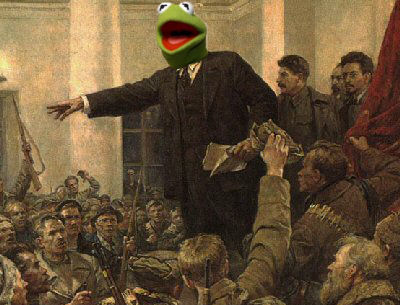
“On the evening of April 16, 1917, Comrade Kermit stepped onto the platform and addressed the awaiting crowd. ‘Down with global capitalism! We are defenders of the Rainbow Connection, comrades! The lovers, the dreamers, and myself know that we have finally found it! We have nothing to lose but our slightly visible strings!’ He then spastically thrashed his arms in the air as the masses cheered their approval.”

“Fozzie, known in Party circles as ‘The Bear,’ was one of Kermit’s closest confidants. A vocal proponent of expanding the revolution to the restive massess in Lidsville and the Neighborhood of Make-Believe, Fozzie was instrumental in beating back the coalition of counter-revolutionary armies led by Captain Kangaroo. A master propagandist and convincing orator, Fozzie’s famous dictum ‘Have you heard the one about the reactionary kulak? Wakka wakka wakka!’ incited bloody pogroms against the landed gentry and urban bourgeoisie classes. Forced into exile after Kermit’s death, Fozzie retreated to a fortified compound in Mexico City where he was pecked to death by an agent of Gonzo in 1930.”

“Miss Piggy (nee Maria Porcidonova) was a nursing student at Veterinarian’s Hospital when she became radicalized by contact with the puppetariat. A fierce advocate of revolutionary violence, she was arrested for karate-chopping a general of the Old Regime to death during broad daylight in a public square. Conflicts with Chairman Kermit over revolutionary goals led Piggy to stage her own failed insurrection. She was sentenced to prison and later executed during a wartime purge.”

“Though a familiar face in Chairman Kermit’s inner circle, Gonzo’s strange behavior and opportunist tendencies caused a great deal of mistrust among his fellow revolutionaries. These suspicions were proven true during the power struggle following Kermit’s death, when Gonzo seized control of the Party and swept aside any all perceived threats to his rule. In addition to the violent purges and pryotechnic show trials directed at so-called ‘enemies of the state,’ Gonzo was also responsible for the devastating famine caused by agricultural reforms unwisely steered by his fixation upon poultry farming.”

“Statler and Waldorf were veteran revolutionaries, and quick to criticize the missteps and failings of their peers. While tolerated — if ignored — during Kermit’s reign as Party chairman, they were among the first victims of Gonzo’s purge of the Old Guard. Both willingly attended trial, confessed to the surprising crime of conspiring with foreign powers against the puppetariat, and were summarily executed. Why — knowing what the outcome would be — did they chose to come there? Perhaps we’ll never know.”

– excerpts from Whose Hand Up Whose Ass: The Rise of the Muppet Socialist Regime by Andrew Otis Weiss

Growing Up 2600: Foul sorcery

January 30th, 2010

In between the bus duels and dirtbike wilding of last night’s XBL Grand Theft Auto IV gaming and bullshit session, Mike Sterling, my brother and I had an informal chat about the 2600 Era of gaming. It centered mostly around the Great Crash of 1984 (as these conversations tend to do), an event that decimated the console gaming industry while dumping a shitload of deeply discounted game cartridges within reach of youngsters who couldn’t otherwise afford to buy them.

Most of the games were utter drek, of course, but the concept of quality is fundamentally alien to the psyche of a ten year old. Novelty, affordability, and the persistance of a creature with a surplus of free time can mitigate a host of sins, and it took an exceptional level of cruddiness to penetrate those blinders.

As a result, my curiosity was piqued when Mike mentioned a 2600 game so horrible that he made the effort to return it to the store and demand a refund of the one dollar sale price. I asked him which game it was, and his answer triggered a simultaneous “Wait, that sounds so familar” response from my brother and me.

Goaded by long suppressed memories and the need to experience a game deemed too awful to play by a man who sincerely enjoyed the 2600 E.T. game, I sought out the game in question…and it is indeed a stinker of the highest magnitude.

Behold, SORCERER!

Sorcerer was one of three games released by Mythicon on the cusp of the Great Videogame Crash, and it epitomizes the in-it-for-a-quick-buck philosophy that characterized most of the efforts from that period. Atari’s hubris regarding market share and sales prospects for high profile, undercooked titles didn’t help the industry’s fortunes, but it was the flood of low-grade shovelware from fly-by-night developers like Mythicon that really killed the golden goose.

Sorcerer isn’t so much a game as it is a hastily programmed collection of elements smooshed together into something vaguely gamelike. As the titual spellcaster, the player mounts up on his trusty magic carpet and proceeds through a series of visually underwhelming screens to battle with what appears to be a French acapella group…

…and the most patriotic hellspawn ever.

Though the enemies appear in clusters of three, they actually constitute a single object when it comes to dispatching them with the sorcerer’s slow-firing, one-shot-at-a-time energy bolt. They also lack anything resembling a pattern, preferring instead to simply jerk about in the throes of a virtual panic attack.

Progress far enough, and the game will treat you to a “dodge the lightning bolt” level, which is as bland and pointless as everything else in the game.

After spending an hour attempting to come to grips with Sorcerer‘s gameplay, I began to wonder if it would be better to approach the title not as an ineptly made shoot ’em up, but rather as a pixelated treatise on existentialism — progress and accomplishment are meaningless concepts, perseverance will inevitably be rewarded with an ignominious death, and the only logical course of action is to hit the kill switch and be done with it all forever.

Proudly powered by WordPress. Theme developed with WordPress Theme Generator.
Copyright © Armagideon Time. All rights reserved.